What is a tracker card and how does it work?
You reach into your pocket – and suddenly there's nothing but emptiness. Almost everyone knows that uneasy feeling when your wallet goes missing. According to statistics, Germans lose important items like wallets or keys an average of 2.3 times a year. And that's not just about money, but also ID cards, debit cards, and all the little things that make up our lives.
This is where tracker cards come in – a clever solution to one of the world's oldest everyday problems. In this article, you'll learn everything you need to know about these smart helpers.
What is a Tracker Card? The Basics Explained
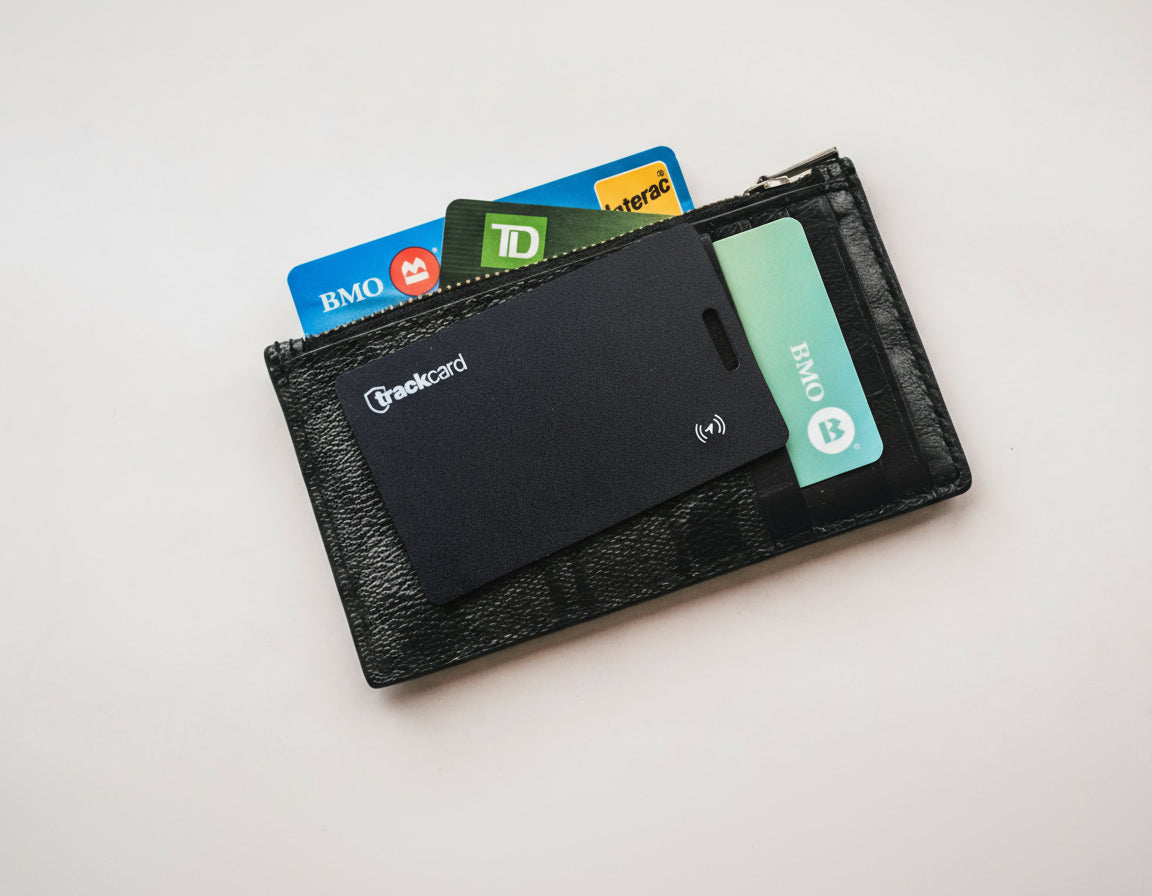
A Tracker Card is a credit card-sized Bluetooth tracking device that fits perfectly in your wallet. Unlike round trackers like Apple AirTags or Samsung SmartTags, which are often too thick or bulky for wallets, the Tracker Card was specifically designed for use in slim wallets.


The credit card format as a game changer
The ISO/IEC 7810 format of a standard credit card (85.6 mm x 53.98 mm) is no coincidence. These dimensions have proven optimal for wallets over decades. A good tracker card uses exactly these dimensions, but is significantly thinner—ideally between 1.6 mm and 2 mm thick .
Why is thickness so crucial? Imagine you have 4-6 cards in your wallet. Every extra millimeter makes a difference. At 3mm thick, your wallet would suddenly bulk up like a small book.
The technology behind it: How tracking works
Bluetooth Low Energy – The basic technology
Tracker cards use Bluetooth Low Energy (BLE) , a low-power version of Bluetooth. This technology periodically emits small signals that can be picked up by nearby smartphones.
Crowdsourcing networks: millions of helpers
The real genius lies in crowdsourcing networks :
- Apple Find My Network : Over 1 billion active iPhones worldwide act as anonymous sniffers
- Google Find My Device : Millions of Android devices form a similar network
Here's how it works: If you lose your wallet, every nearby iPhone or Android device receives the Bluetooth signal from your tracker card and transmits the position in encrypted form to the respective network. You see the location, but no one else—not even the smartphone owner who relayed the signal.
Data protection through end-to-end encryption
The location data is transmitted end-to-end encrypted . This means that neither Apple nor Google can see your location. Even the manufacturer of the tracker card has no access to your location data.
iOS vs. Android: The two worlds of tracking
Why platform-specific solutions?
Apple and Google have deliberately kept their networks separate. An iOS-compatible tracker won't work with Android devices, and vice versa. This is for technical and security reasons —both companies want to retain full control over their ecosystems.
Apple Find My: The market leader
Strengthen:
- Largest network worldwide (especially in urban areas)
- Precise location thanks to high iPhone density
- Separation alarms work reliably
Weaken:
- Works exclusively with iOS devices
- Less dense coverage in rural areas
Google Find My Device: The Catcher
Strengthen:
- UWB (Ultra-Wideband) technology for centimeter-accurate location on newer Android devices
- Large number of compatible devices worldwide
- Continuous improvements
Weaken:
- No disconnection alerts when Bluetooth is lost
- Network not yet as dense as Apple's
- Shorter battery life for many Android trackers (approx. 2-3 years for battery models)
Thick card = big problem: Why every millimeter counts
The 1.7mm sweet spot
After extensive testing, 1.7mm has emerged as the optimal thickness. This is roughly the thickness of two standard credit cards. Trackers that are thinner (like the Slimpuro Tracker ) often compromise on noise or battery life. Thicker models, like the KeySmart at 2mm, are annoying for daily use.
Materials science meets everyday usability
Durability versus thinness is a real balancing act. The best tracker cards use high-quality materials like reinforced ABS plastic or even metal composites. Cheap models often break after just a few months in your back pocket—a common problem that users complain about in reviews.
Waterproof to IP67 or IP68 standard protects against rain, spilled drinks or even accidental washing in the washing machine.
Rechargeable battery vs. battery: Which makes more sense?
The environmental aspect
Built-in batteries are an environmental problem. After one to three years, these trackers end up in electronic waste. Rechargeable batteries are more sustainable and cheaper in the long run.
Realistic running times
- Tracker with battery : 1-3 years, then complete replacement necessary
- Tracker with battery : 3-6 months between charges, but years of use possible
Charging comfort in practice
The best rechargeable trackers support wireless charging . Simply place them on a standard smartphone charging pad—it couldn't be more convenient.
The sound makes the music: speaker technology
Why 105 dB is a masterpiece
Fitting a speaker capable of 105 decibels into a 1.7mm-thin card is technologically impressive. By comparison, many competitors achieve significantly lower levels: For example, the Atuvos Tracker reaches 80-100 dB . To put the 105 dB into perspective:
- 60 dB: Normal conversation
- 80 dB: vacuum cleaner
- 100 dB: Motorcycle
- 105 dB: Tracker card (louder than most competitors with only 72-100 dB)
Frequency ranges: What penetrates upholstery best?
Mid-frequencies (1000-3000 Hz) penetrate textiles and upholstery most effectively. Good tracker cards are optimized for these frequency ranges.
Practical test: Where can you hear what?
- Sofa/Upholstery : Up to 105 dB required
- Handbag : 80-90 dB sufficient
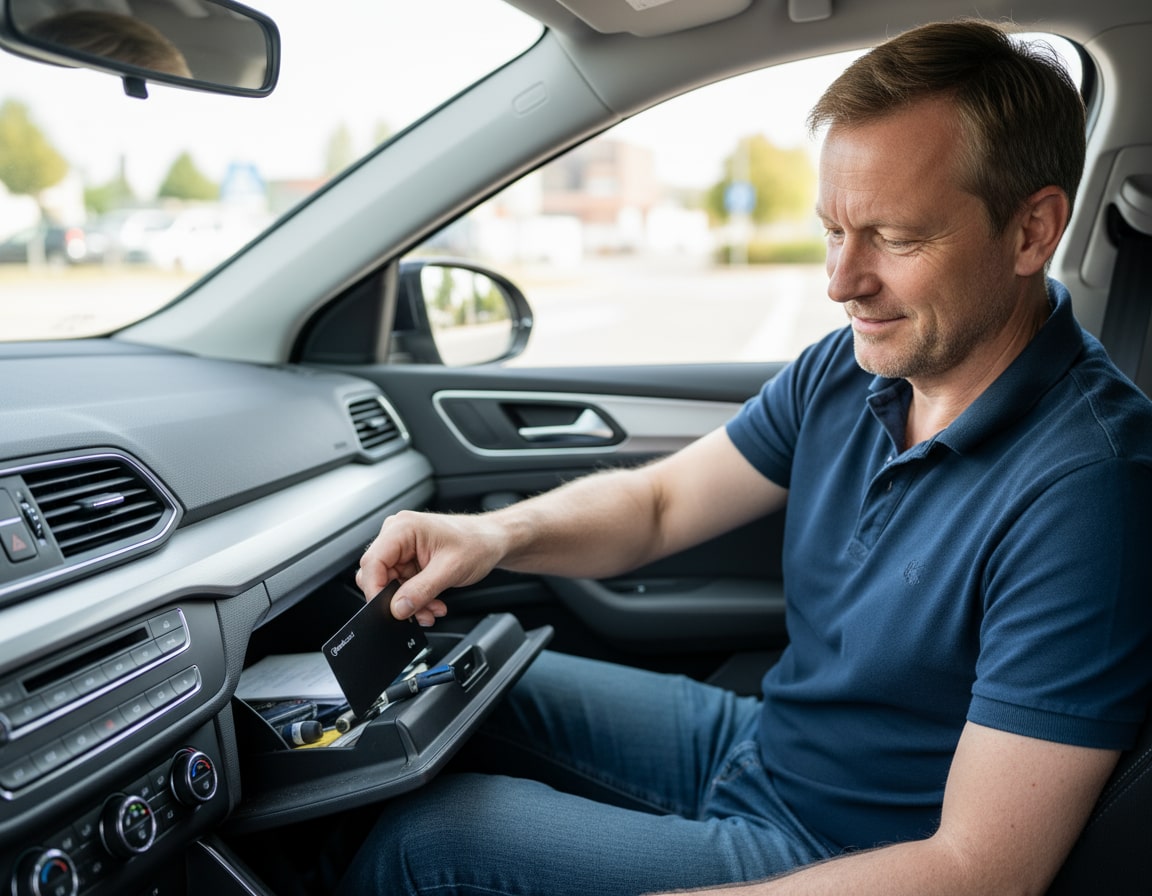
- Auto : 100+ dB recommended due to ambient noise
Data protection: Who sees what, when, where?
The anonymity principle
Crowdsourcing without data leakage works like this: Your lost wallet is detected by someone else's iPhone. This iPhone:
- Only sees an anonymous Bluetooth signal
- Transmits the position encrypted
- Never finds out who the tracker belongs to
- Is never identified as a "finder"
What the tech giants really know
- Apple/Google : View anonymized, encrypted location data
- Tracker manufacturer : Ideally has no access to location data
- You : Only see the position of your own objects
GDPR compliance
Strict data protection regulations apply in Europe. Reputable tracker manufacturers are GDPR-compliant and do not process personal data.
Use cases beyond the wallet
Creative applications
What works well:
- Passport cover on flights
- Laptop bag in the office
- Important documents in the file folder
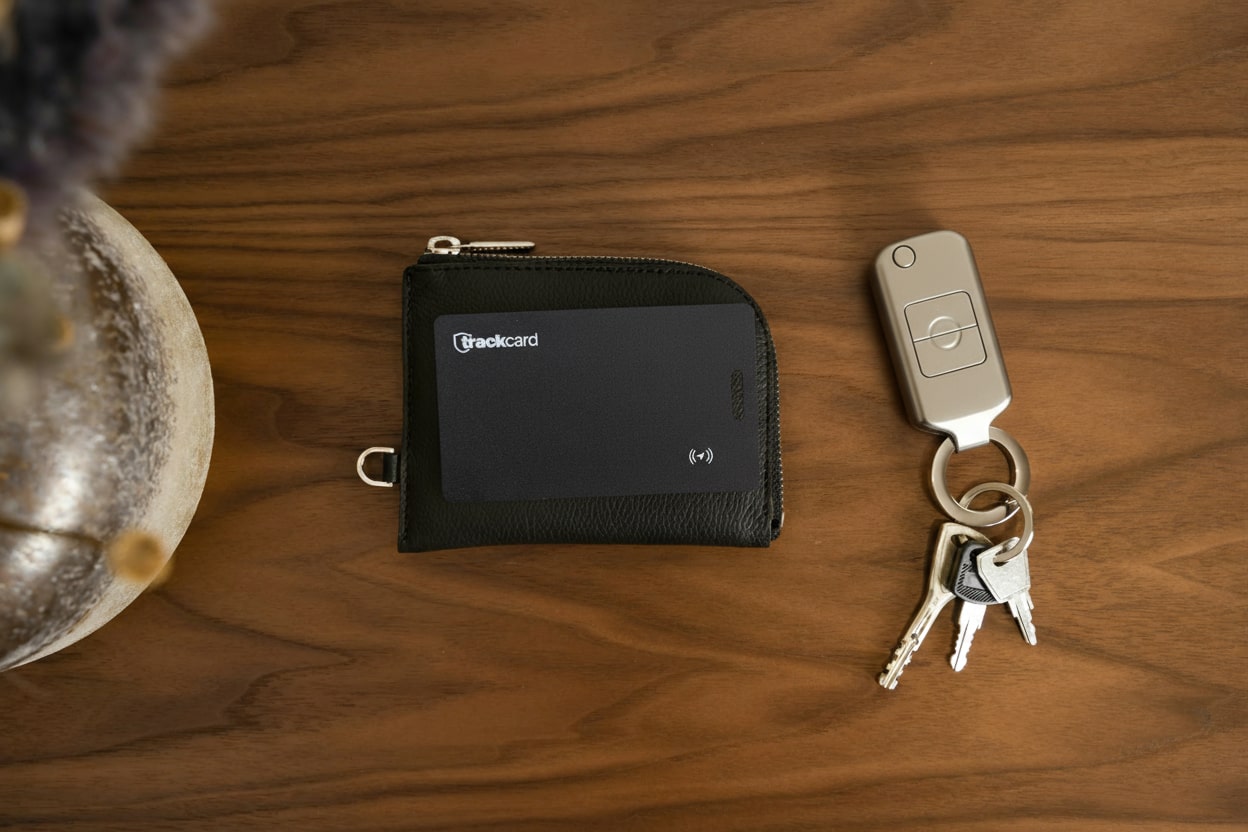
- Key case (if large enough)
What works less:
- Single keys (too small for credit card format)
- Very small bags
- Objects that are often in metallic environments (Bluetooth interference)
An honest look at the limits of technology
Tracker cards are not GPS devices . They only work when other smartphones are nearby . They are less effective in very remote areas without cell coverage.
Buying advice: What should you pay attention to?
The ultimate checklist
Technical specifications:
- ✅ Thickness: Maximum 2mm, optimal 1.7mm
- ✅ Volume: At least 100 dB
- ✅ Battery life: At least 3 months
- ✅ Water protection: IP67 or better
Platform compatibility:
- ✅ iOS: Search for "Find My compatible"
- ✅ Android: "Find My Device compatible"
Sustainability:
- ✅ Rechargeable vs. disposable battery
- ✅ High-quality materials for durability
Price-performance rating
Electronic waste (€15-20) : Often with built-in batteries and lower noise levels. Many cheaper models have reliability issues , as user reviews show. Premium (21-40€) : Good balance between features and price
When is it really worth buying?
YES, if you:
- You regularly search for your wallet
- You travel a lot
- Transport important documents
- value sustainability
NO, if you:
- You are very structured and never lose anything
- You are mainly traveling in very remote areas
- Use a very small wallet with no space for cards
The future of tracker technology
UWB: Ultra Wideband
Ultra-wideband technology enables centimeter-precise tracking and is already built into newer iPhones and Android devices. The next generation of tracker maps will be able to utilize this precision.

Integration into payment cards: vision becomes reality
Banks are already experimenting with integrated trackers in debit and credit cards . Separate tracker cards could become obsolete in three to five years.
Why the market remains fragmented
As long as Apple and Google keep their networks separate, platform-specific solutions will continue to exist. This is actually good for consumers , as both sides have to invest in innovation.
Conclusion: Who benefits from a tracker card?
The honest recommendation
Tracker cards are ideal for:
- Busy people who are often on the move
- People who regularly search for their wallet
- Anyone who wants to transport important documents safely
- Environmentally conscious people who prefer rechargeable technology
Other solutions are better for:
- Very structured people who never lose anything
- Users of very small wallets without card slots
- People in very rural areas without smartphone coverage
Pros and cons at a glance
✅ Advantages:
- Unobtrusive integration into your wallet
- Use of existing networks (no extra apps required)
- Sustainable with rechargeable models
- Data protection friendly
❌ Disadvantages:
- Platform dependency (iOS vs. Android)
- Only works with smartphone cover
- Regular charging required (for battery models)
- Additional item in the wallet
The clear buying tip
When choosing a tracker card, look for high-quality workmanship, sufficient noise level (100+ dB), and rechargeability . The Trackcard, for example, combines all of these features: At 1.7 mm thick, 105 dB (iOS version), and up to 6 months of battery life, it sets the standard in its category.
Investing €30-50 can save you hours of searching and the stress of a lost wallet. In an age where everything is digitalized, it's ironically convenient that the solution to lost wallets is, of all things, another card.
Frequently Asked Questions (FAQ)
Q: Does an iOS tracker card work with Android? A: No, the networks are separate. iOS trackers only work with Apple Find My, while Android trackers only work with Google Find My Device.
Q: How long does the battery last? A: Depending on the model, between 3-6 months. High-end models, such as the trackcard, can last up to 6 months.
Q: Will the card interfere with payments? A: No, Tracker cards do not use RFID technology and do not interfere with contactless payments.
Q: What happens if I lose my smartphone? A: You can log into your Apple/Google account on another device and still access tracking.
Q: How loud is 105 dB really? A: As loud as a chainsaw or a jackhammer—definitely loud enough to be heard through upholstery and bags.